
 English
 Español
 Pусский
 Indonesia
Con lăn áp lực
Pressure Roller: Function, Design, and Applications A pressure roller is a critical component in various industrial and manufacturing processes, particularly in systems where consistent pressure application is required to ensure product quality, adhesion, or material shaping. It consists of a cylindrical roller designed to exert controlled pressure on a substrate, often in conjunction with another roller or surface. Pressure rollers are widely used in industries such as printing, laminating, paper converting, textile processing, and composite material production. Function and Working Principle The primary function of a pressure roller is to apply uniform pressure across a surface to achieve specific outcomes, such as bonding layers, smoothing materials, or transferring coatings. In printing presses, for example, pressure rollers ensure ink is evenly distributed onto paper or other substrates. In laminating machines, they help adhere films or foils to surfaces by pressing them together under heat or pressure. The roller’s effectiveness depends on factors like hardness, surface finish, and the ability to maintain consistent pressure without deformation. Design and Materials Pressure rollers are engineered to withstand high loads and repetitive use while maintaining precision. Common materials include: - Rubber or Elastomers: Provide flexibility and grip, ideal for applications requiring friction or cushioning. - Metal (Steel or Aluminum): Used for high-pressure applications where rigidity and durability are essential. - Composite Materials: Combine properties like heat resistance and wear durability for specialized uses. The roller’s surface may be smooth, textured, or coated (e.g., with silicone or PTFE) to suit specific processes. Internal structures often include bearings or shafts to ensure smooth rotation and alignment. Key Applications 1. Printing Industry: Pressure rollers in offset or flexographic presses ensure precise ink transfer and paper handling. 2. Laminating and Coating: Used to bond films, adhesives, or protective layers to substrates like paper, plastic, or metal. 3. Textile Processing: Help in calendaring fabrics to achieve desired finishes or thicknesses. 4. Converting Operations: Critical in slitting, embossing, or die-cutting processes where material consistency is vital. Maintenance and Performance To ensure longevity, pressure rollers require regular inspection for wear, surface damage, or misalignment. Proper cleaning and lubrication (where applicable) prevent contamination or uneven performance. In high-temperature applications, heat-resistant materials and cooling systems may be integrated. Conclusion Pressure rollers play an indispensable role in manufacturing by enabling precise, repeatable pressure application. Their design and material selection must align with operational demands to ensure efficiency and product quality. Whether in printing, laminating, or textile processing, these components contribute to the reliability and performance of industrial systems.
Sản phẩm
Danh mục:
-
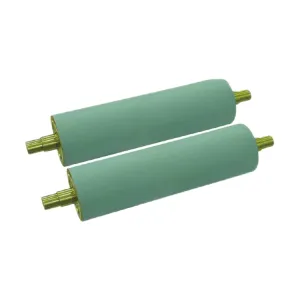
Con lăn lịch
Phân loại của họ: Con lăn cao su luyện kimLượt xem: 51Số:Thời gian phát hành: 2025-08-21 15:35:03Con lăn Lịch là một bộ phận được thiết kế chính xác, được thiết kế cho các quy trình cán hiệu suất cao trong các ngành công nghiệp như sản xuất giấy, sản xuất màng nhựa, gia công dệt may và hoàn thiện lá kim loại. Nó đảm bảo độ dày đồng đều, bề mặt mịn và nâng cao tính chất vật liệu thông qua áp suất và nhiệt độ được kiểm soát.
Tin tức
Danh mục:
Không có kết quả tìm kiếm!
Trường hợp
Danh mục:
Không có kết quả tìm kiếm!
Video
Danh mục:
Không có kết quả tìm kiếm!
Tải về
Danh mục:
Không có kết quả tìm kiếm!
Tuyển dụng
Danh mục:
Không có kết quả tìm kiếm!
Sản phẩm được đề xuất
Không có kết quả tìm kiếm!

 Người liên hệ: Mr.Wu
 Điện thoại: +86 18602539156
 Email:wuqi231138@126.com